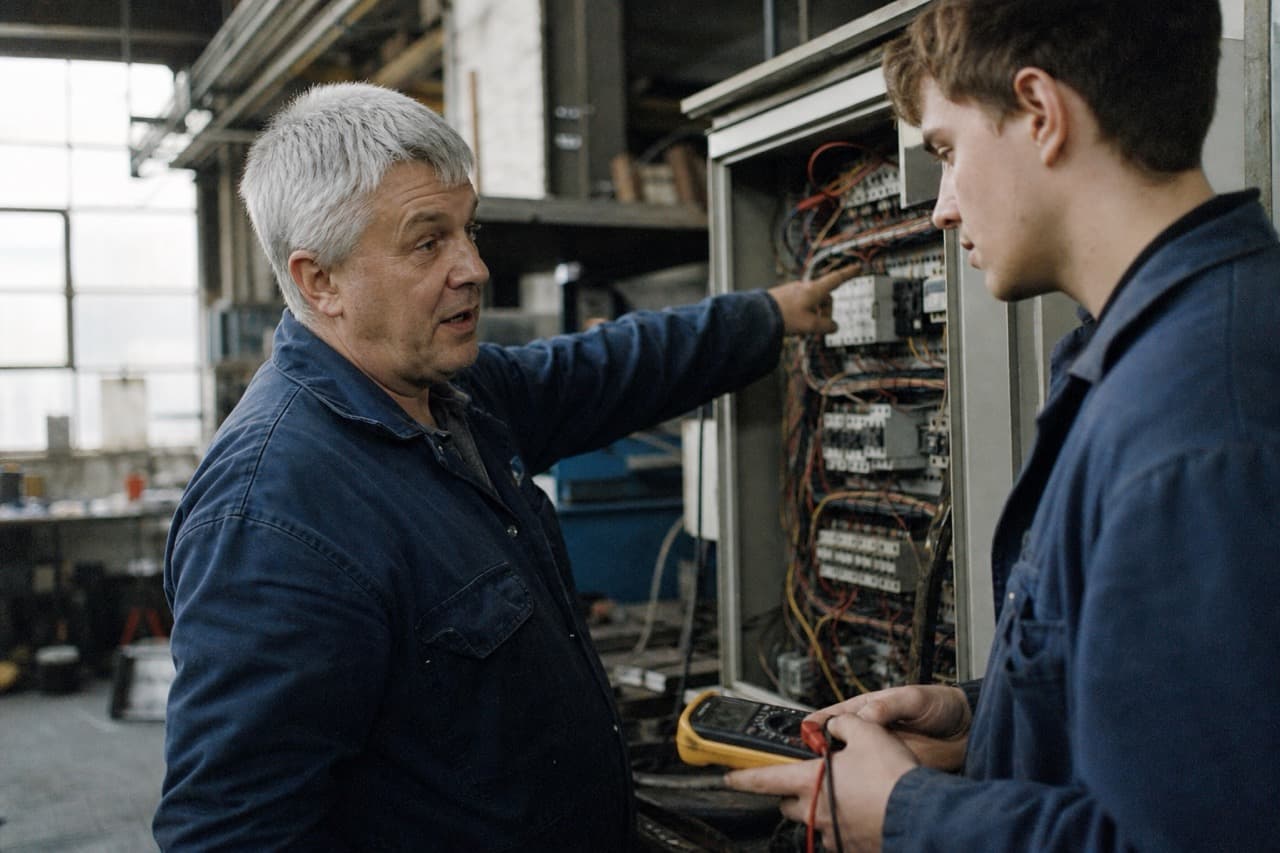
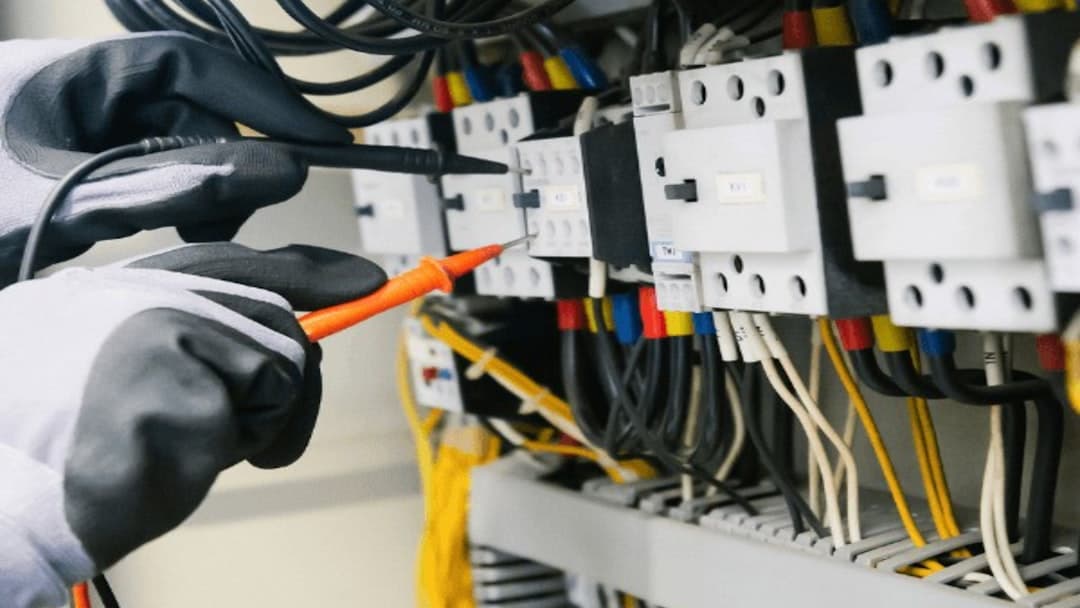
Every engineering business has one.
The engineer everybody calls when nobody else can solve the problem.
They know the old equipment. They remember the unusual faults. They know which manual contains the drawing everyone else can never find. They know which customer modified a machine fifteen years ago and why the wiring no longer matches the schematic.
When an engineer gets stuck on site, they're often the first person they call.
These people are incredibly valuable. They're also potentially one of the biggest knowledge risks inside an engineering business.
Not because they're doing anything wrong. Quite the opposite.
Because over twenty or thirty years, they've accumulated something the organisation may not actually own.
Experience.
And if that experience exists primarily inside one person's head, the business only has access to it for as long as that person is available.
The Engineer Everyone Calls
I've seen this happen repeatedly throughout my career.
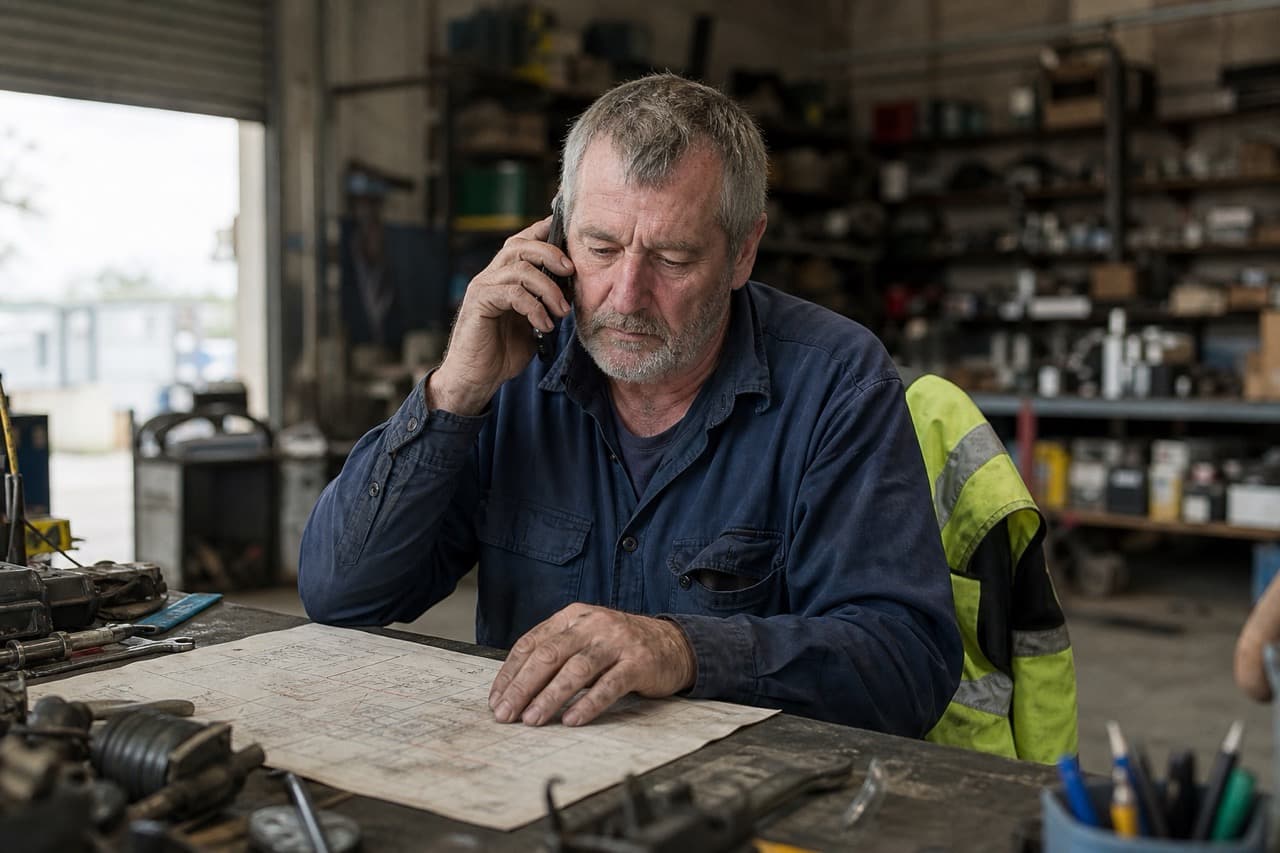
A difficult fault appears. The engineer on site spends an hour investigating it. Eventually, they make the call.
The experienced engineer listens to the symptoms and within a few minutes says something like:
"Check that relay."
Or: "Have a look at terminal X12."
Or simply: "I've seen this before."
Quite often, they're right.
To everyone else, it can almost look instinctive. It isn't.
What you're witnessing is decades of pattern recognition. Thousands of previous breakdowns. Hundreds of mistakes. Machines that behaved similarly. Conversations with other engineers. Lessons learnt on wet Tuesday afternoons twenty years earlier that nobody ever thought to write down.
All of that experience has gradually become judgement.
The problem is that very little of that judgement belongs to the organisation. It belongs to the engineer.
The Risk Is Almost Invisible
If you asked most engineering businesses where their technical knowledge is stored, they'd probably point towards something. A document management system. A shared drive. A filing cabinet. Technical manuals. Service reports. Their CRM.
All useful. But then ask a different question.
Where does your engineering judgement live?
That's much harder to answer.
Where is the knowledge that tells an engineer which of five possible faults they should investigate first? Where is the reason an experienced engineer distrusts a particular symptom? Where is the story behind the temporary repair that became permanent twelve years ago?
Where is the knowledge that says: "The manual tells you to do this, but on that particular model, check this first."
Often, the answer is surprisingly simple.
Inside someone's head.
That's the risk.
Then One Day They Leave
I've experienced what happens next.
An experienced engineer leaves the business. At first, almost nothing changes. The vans still go out. The engineers still attend jobs. Customers still call. The business carries on.
Then the office phone starts ringing more often. Not customers. Engineers.
Questions that previously took five minutes to answer suddenly take thirty. Jobs that were completed in one visit begin requiring two. Someone encounters an old machine and nobody remembers the peculiar fault it had seven years earlier. Another engineer spends two hours diagnosing something the business has already solved before.
Nothing catastrophic happens. Instead, knowledge disappears through hundreds of tiny inefficiencies.
That's what makes the problem so difficult to see. You don't receive an invoice saying:
Lost Engineering Experience: £25,000
The cost appears somewhere else. Additional labour. Return visits. Longer fault-finding. More technical-support calls. Slower apprenticeships. Incorrect parts. Downtime. Customer frustration. Eventually, recruitment.
The business starts paying to recreate experience it once already possessed.
Documentation Isn't Enough
The obvious solution is: "We need better documentation."
You probably do. But documentation only solves part of the problem.
Imagine an engineer calls your most experienced technician from site. They describe the fault. The experienced engineer says: "Replace the sensor."
The sensor is replaced. The machine works. The service report says:
Replaced faulty sensor. Tested. Working correctly.
Technically, everything has been documented. But almost everything valuable has disappeared.
Why did the experienced engineer suspect the sensor? What did they hear in the description? Which other possibilities did they immediately eliminate? Had they seen the fault before? What test would have confirmed their diagnosis? What would they have checked next if the sensor wasn't responsible?
The repair was recorded. The reasoning wasn't.
And it's the reasoning that helps create the next experienced engineer.
The Expert Can Become the Bottleneck
There's another problem with relying too heavily on your most experienced people.
Success makes the problem worse.
The better they become, the more people call them. Eventually, one engineer becomes the unofficial technical-support department. Every difficult problem flows towards them. Every apprentice wants their help. Every unusual machine needs their attention.
The organisation becomes dependent on the very person whose knowledge it most needs to distribute.
This isn't their fault. It's usually a sign that they're extremely good at what they do. But it creates a fragile system.
If twenty engineers depend on one person's experience, you haven't really created twenty capable engineers. You've created nineteen engineers connected to one very busy one.
Experience Should Multiply
The alternative is not to make experienced engineers less important. It's to make their experience more valuable.
Imagine that every difficult technical-support conversation left something behind. Every unusual diagnosis became searchable. Every service report added context. Every commissioning lesson became available to the next engineer. Every old manual could be connected to the practical experience of people who had actually worked on the equipment.
Then something changes.
When your most experienced engineer helps one person, they aren't only solving one problem. They're contributing to the organisation's collective engineering memory.
Their experience begins to multiply.
That's the opportunity.
Preserve the Thinking, Not Just the Answer
If you're trying to reduce knowledge risk inside an engineering business, start with the people everybody calls.
Ask them why.
Not just: "What should we do?"
Ask: "Why would you check that first?"
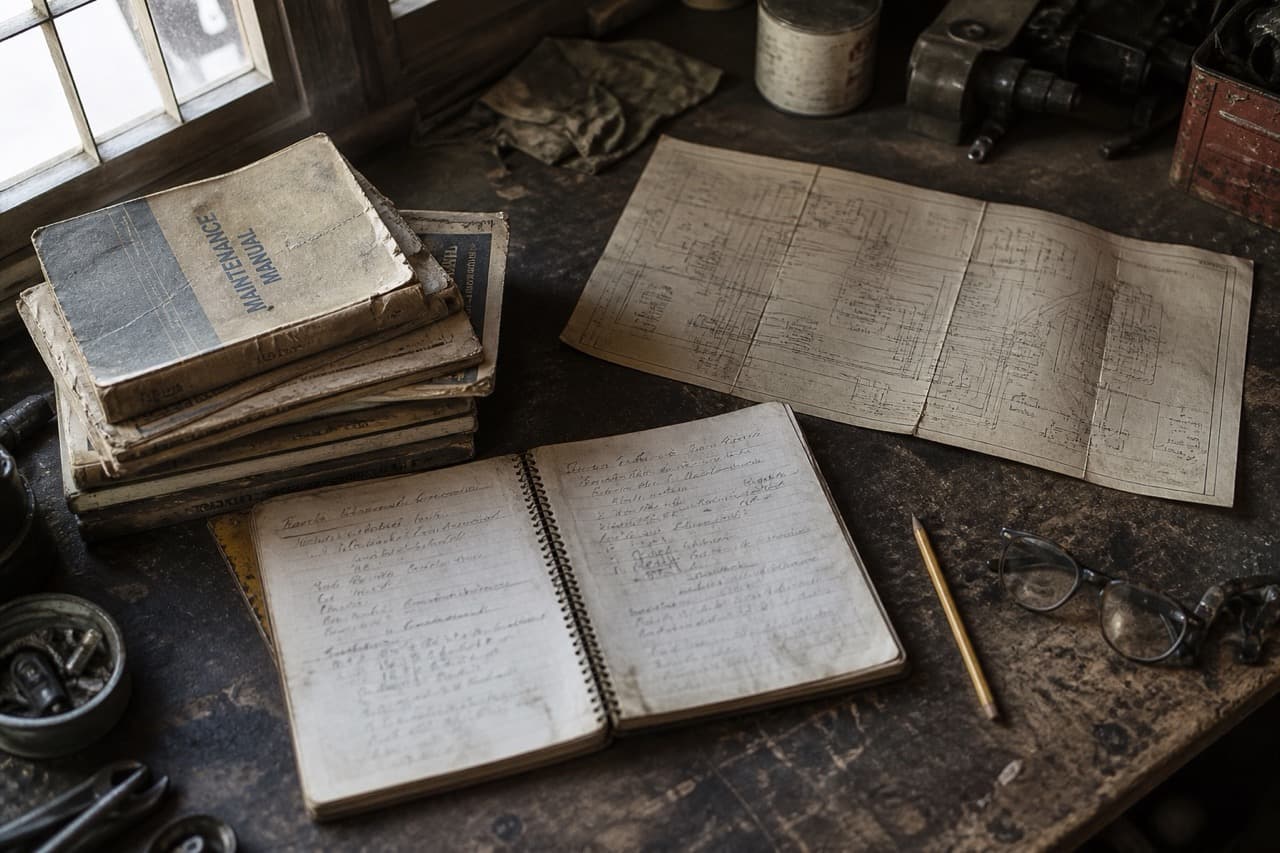
Capture technical-support conversations. Preserve troubleshooting notes. Keep service history. Digitise old manuals and drawings. Record unusual modifications. Ask experienced engineers about the faults they remember.
And when a difficult problem is solved, capture the reasoning while it's still fresh.
Don't wait until somebody announces their retirement. By then, you're trying to download thirty years of experience in three months. It doesn't work.
Knowledge preservation should be part of everyday engineering.
From Knowledge Risk to Engineering Memory
This is one of the reasons we built Tarin.
Not to replace the experienced engineer. And certainly not to pretend that artificial intelligence possesses the judgement of someone who has spent thirty years solving real engineering problems.
The objective is almost the opposite.
Preserve more of what those people know.
Tarin is designed to help organisations bring together technical information and accumulated engineering experience so that engineers can access relevant knowledge when they need it. Manuals. Drawings. Service information. Troubleshooting history. Engineering notes. And, increasingly, the reasoning behind previous decisions.
AI provides a new way of making that accumulated knowledge accessible. But the philosophy remains very human.
AI remembers. Engineers decide.
Your Best Engineer Should Leave a Legacy
Your most experienced engineer may be one of the most valuable people in your organisation. Treat them that way.
But don't measure their contribution only by the machines they repair today. Their greatest value may be the engineers they help develop tomorrow.
Every fault they explain. Every story they share. Every mistake they help someone avoid. Every piece of judgement they leave behind.
That is their engineering legacy.
The goal isn't to make the business independent of experienced engineers. It's to make sure the business continues benefiting from their experience long after they've finished solving the problem.
Because eventually every engineer leaves.
The question is whether their experience leaves with them.
If you'd like to see how Tarin could help preserve your team's experience, book a free call.
 Engineering Memory